

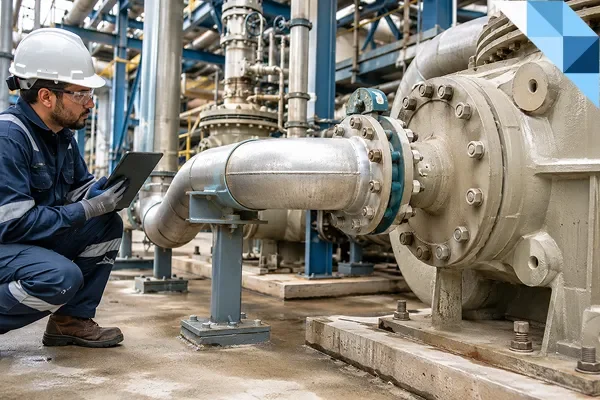

Brownfield piping work often looks simple on paper. A short tie-in, a small reroute, one support moved to make space for access, or a new skid connected to an existing line may not seem like a major design change. But in an operating facility, even a limited modification can change how loads move through the piping system.
That is why brownfield piping modification should not be treated only as a construction activity. In many cases, it also needs an engineering review. The question is not whether every change requires a full calculation from the beginning. The real question is whether the change affects flexibility, support loads, thermal movement, equipment connections, vibration behaviour, or code compliance.
When it does, stress re-analysis may be needed before the modified line is returned to service.
Why Brownfield Piping Changes Are Different from New Design
New piping design starts from a controlled model. The line list, routing, support philosophy, design temperature, design pressure and connected equipment are usually reviewed together before fabrication or installation.
Brownfield work is different.
Existing piping has already been installed, operated, repaired, supported, modified and sometimes informally adjusted in the field. The actual condition may not fully match the latest drawing. Some supports may have been changed during maintenance. A line may have sagged over time. Corrosion, vibration history, previous repairs or insulation changes may also affect how the system behaves.
This is why changes to industrial piping systems need a more careful look in existing plants than they might appear to need on a drawing. The old system is not a blank sheet. It already carries loads, restraints, thermal movements and operating history.
A modification that is acceptable in a new design model may become problematic when added to an existing line with limited flexibility, ageing supports or sensitive connected equipment.
What Counts as a Brownfield Piping Modification?
A brownfield modification is any change made to an existing piping system after it has already been designed, installed or operated. Some modifications are planned as part of a formal revamp. Others happen during maintenance, troubleshooting, debottlenecking or package installation.
Common examples include:
- New tie-ins to connect additional equipment or process lines.
- Rerouting part of a line to avoid clashes or improve access.
- Support changes, including removing, relocating or adding supports.
- New valves, strainers, instruments or heavy components added to an existing line.
- Connection to new pumps, vessels, heat exchangers, compressors or skids.
- Changes in operating temperature, pressure, flow rate or fluid service.
- Replacement of pipe sections with different wall thickness, material or configuration.
- Temporary bypasses that remain in service longer than originally intended.
- Field changes that are not fully reflected in drawings or stress models.
In these situations, the first technical question should be simple: does the modified condition still represent the same piping system that was originally checked?
If the answer is unclear, the project may need as-built preparation and validation before any meaningful engineering review can be trusted. A stress model based on outdated drawings can be more misleading than useful.
When Is Stress Re-Analysis Usually Required?
Not every small change needs a complete new stress study. But some changes are strong indicators that the line should be reviewed again. These are the cases where piping stress re-analysis is usually worth considering.
New Tie-Ins or Connections to Existing Lines
A new tie-in can change the stiffness and load path of an existing system. It may add weight, introduce new thermal restraints, change the way expansion is absorbed, or transfer loads into parts of the line that were not originally designed for them.
This is especially important when the tie-in is made to hot lines, large bore piping, high-pressure systems or lines connected to sensitive equipment.
A tie-in is not just a branch connection. It is a change to the behaviour of the system.
Rerouting or Layout Changes
Rerouting can be necessary because of access, clashes, package interfaces or field limitations. But when routing changes, flexibility changes too.
A line that originally had enough natural flexibility may become more restrained after rerouting. Expansion loops may become less effective. Supports may start carrying different loads. Anchor points may see forces that were not expected in the original design.
Even a visually neat reroute can create stress problems if the thermal movement and restraint conditions are not checked.
Support Changes or Removed Restraints
Supports are often adjusted during brownfield work because they interfere with construction, access or new equipment. A support may be moved slightly, removed temporarily, replaced with a different type, or added without a full review of the original support philosophy.
This is one of the most common sources of hidden risk.
A support does not only “hold the pipe.” It controls weight distribution, movement, vibration response and sometimes thermal expansion. Changing it can increase stress in nearby fittings, overload other supports or create unintended restraint.
For this reason, support changes should be reviewed carefully before the line is restarted.
New Equipment Connections
When piping is connected to pumps, vessels, heat exchangers, compressors or packaged equipment, the piping does not act alone anymore. It can transfer forces and moments into equipment nozzles.
This matters because equipment nozzles usually have allowable load limits. If the piping system pushes or pulls beyond those limits, the result may be flange leakage, misalignment, seal problems, vibration, local damage or reduced reliability.
In brownfield projects, this risk is higher because the existing piping may not have been designed for the new equipment arrangement. A skid connection, for example, may look straightforward mechanically but still introduce load combinations that need engineering verification.
Operating Condition Changes
Stress analysis is based on operating assumptions. If those assumptions change, the previous result may no longer be valid.
A change in temperature can affect thermal expansion. A pressure increase can affect sustained and occasional stresses. A change in fluid density can affect weight. New transient conditions, such as start-up, shutdown, water hammer or slug flow, can also change the loading picture.
When operating conditions change materially, the piping should not be judged only by its existing physical condition. The modified service condition needs to be reviewed.
Vibration, Leakage or Repeated Maintenance Issues
Sometimes the need for stress re-analysis becomes visible after the modification.
Examples include:
- Flange leakage after restart.
- Unexpected vibration near equipment or supports.
- Repeated gasket failure.
- Cracking at welded attachments or small-bore connections.
- Support damage or abnormal movement.
- Frequent maintenance issues in the same area.
These signs do not always mean the original calculation was wrong. They may mean the actual installed condition, operating behaviour or modification impact is different from what was assumed.
Inspection may identify the visible problem. Stress re-analysis helps explain whether the system behaviour is contributing to it.
What Can Go Wrong If Modification Is Not Re-Analysed?
The risk is not only a failed calculation file or a missing document. The real risk is returning a modified system to operation without understanding how the change affects the line.
Possible consequences include:
- Overstressed pipe sections near bends, tees, reducers or branch connections.
- Excessive displacement during hot operation.
- Overloaded equipment nozzles on pumps, vessels or heat exchangers.
- Support overload or support failure.
- Flange leakage after start-up or thermal cycling.
- Fatigue cracking caused by vibration or repeated movement.
- Poor alignment at equipment connections.
- Code compliance gaps during modification approval or handover.
- Delayed restart if problems appear late.
- Unplanned shutdown caused by a problem that could have been reviewed earlier.
A proper piping stress analysis service helps project teams check whether the modified piping system remains acceptable under realistic load cases, operating conditions and support assumptions.
In brownfield work, the value of this review is often practical. It helps avoid late rework, restart delays, damaged equipment and uncertainty during handover.
What Information Is Needed Before Re-Running the Analysis?
A stress re-analysis is only as reliable as the information behind it. In brownfield projects, this is often the most important part of the job.
Before re-running the analysis, the engineering team usually needs:
- Latest isometric drawings and P&IDs.
- As-built drawings or field verification records.
- Line list and design conditions.
- Operating temperature and pressure.
- Pipe material, wall thickness and corrosion allowance.
- Support and restraint details.
- Weights of new valves, instruments or added components.
- Equipment nozzle allowable loads.
- Previous stress reports, if available.
- Inspection findings, including corrosion, thinning or visible damage.
- Proposed modification drawings.
- Construction or field change records.
If the existing documentation is incomplete, field verification becomes important. A model built on the wrong support location, wrong pipe route or outdated equipment interface can produce a result that looks precise but does not represent the real system.
This is where asset integrity management support becomes relevant. Brownfield stress review is not only about calculation. It depends on inspection evidence, operating data, field condition and engineering judgement working together.
How Stress Re-Analysis Supports Safer Brownfield Work
A good stress re-analysis does not simply say “pass” or “fail.” It gives the project team a clearer basis for decision-making.
It can help confirm whether the modified line has enough flexibility, whether supports are adequate, whether connected equipment is protected, and whether the system remains within the applicable code limits. It can also identify where design changes are needed before construction, rather than after start-up.
For project teams, this can support:
- Modification approval before field execution.
- Support design or support adjustment.
- Equipment nozzle load verification.
- Shutdown and restart planning.
- Handover documentation.
- Risk control for ageing or modified assets.
- Reduced rework during commissioning.
In a brownfield facility, this matters because the cost of discovering a problem late is often much higher than the cost of reviewing it early.
Where Brownfield Stress Re-Analysis Fits in NWE’s Support
Brownfield piping work sits between design, inspection, construction and operation. It needs enough engineering depth to verify the modified condition, but it also needs practical awareness of how existing plants actually change in the field.
NWE supports industrial projects with piping stress analysis, brownfield modification review, as-built validation and asset integrity engineering. For project teams working with tie-ins, rerouting, support changes, equipment connections or restart preparation, the aim is to verify that the modified piping system remains safe, code-aligned and suitable for operation.
This type of review is especially useful when the project involves ageing assets, incomplete drawings, new equipment interfaces or changes made under shutdown pressure.
Frequently Asked Questions
Does every piping modification require stress re-analysis?
No. Not every small piping change requires a full stress re-analysis. However, if the modification affects routing, supports, operating conditions, equipment connections or load distribution, an engineering review is recommended before the line is returned to service.
Is stress re-analysis needed for small field changes?
Sometimes, yes. A field change may look minor but still affect a restrained line, hot service, equipment nozzle load or support reaction. The impact depends on the system, not only the physical size of the change.
What is the difference between inspection and stress re-analysis?
Inspection shows the current physical condition of the piping, such as corrosion, leakage, cracking or visible damage. Stress re-analysis checks whether the piping system can safely handle the expected loads, movements and operating conditions after modification. In many brownfield cases, both are needed.
Should as-built drawings be checked before stress re-analysis?
Yes. If the stress model is based on outdated drawings, the result may not reflect the real piping system. As-built verification is especially important when supports, routing, equipment connections or previous field changes are uncertain.
