
How NWE transformed an undocumented asset into a traceable, risk-managed system through independent inspection and documentation recovery.
Project Snapshot
| Industry | Industrial Manufacturing |
| Asset / Scope | Atmospheric Oil Circulation Unit (OCU) |
| Service | Asset Integrity Assessment |
| Standards | FOR 2009-06-08-602 §9 · ISO/IEC 17020 Type A |
| Location | Confidential Industrial Facility |
| Status | Successfully Completed |
The Challenge: An Operational Asset Without a Reliable Integrity Baseline
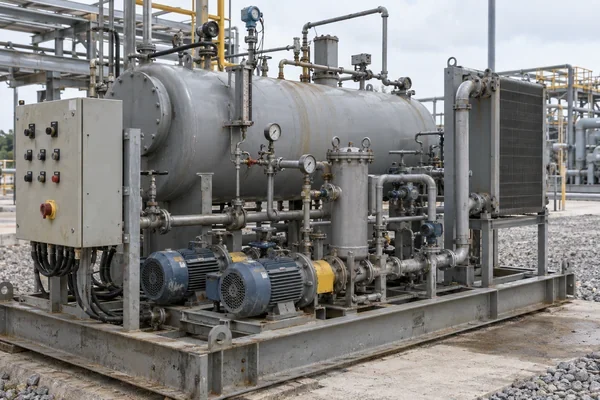
The Oil Circulation Unit supported a critical compressor package, but its integrity status was not fully traceable.
The asset had no documented inspection history, incomplete design information, missing material traceability, and no verified calibration records for key instrumentation. Without a reliable baseline, the client had limited visibility into the unit’s actual condition, degradation risks, and long-term operational reliability.
The challenge was not limited to the tank body. Missing documentation affected maintenance planning, regulatory confidence, future inspections, and the client’s ability to make informed decisions about continued service.
For NWE, the central question was clear: can this asset be moved from undocumented operation into a controlled integrity management framework?
NWE’s Approach: Inspect the Asset, Recover the Evidence
NWE carried out a multidisciplinary integrity assessment combining physical inspection, documentation review, and degradation mechanism evaluation.
The inspection programme included close visual examination of the tank body, welds, supports, connections, associated circulation lines, filter components, instrumentation, electrical safety items, and safety-related records. Ultrasonic thickness measurements were performed to confirm the remaining wall condition and establish a measurable baseline for future inspections.
In parallel, NWE reviewed and recovered critical technical documentation, including design data, material certificates, instrumentation calibration records, electrical motor information, relief valve documentation, oil quality records, and maintenance-related information.
This approach reflects NWE’s Asset Integrity Management methodology: reliable decisions require both physical asset evidence and traceable engineering documentation. Inspection alone shows current condition; documentation control makes that condition manageable over time.
Results & Value Delivered
The assessment confirmed that the OCU remained suitable for continued service under the inspected conditions. No active leaks, weld defects, structural deformation, or significant wall loss were identified. Ultrasonic measurements confirmed the tank wall remained within acceptable limits, and the final integrity verdict was satisfactory.
Key Outcomes
- First traceable integrity baseline established for the OCU.
- No active leaks, weld defects, or structural abnormalities identified.
- Ultrasonic thickness measurements confirmed acceptable remaining wall condition.
- Missing design, material, calibration, safety, and maintenance records reviewed or recovered.
- Degradation risks such as corrosion, MIC, and SCC evaluated under current service conditions.
- Risk-Based Inspection strategy established for future monitoring.
- Documentation package strengthened for maintenance planning and audit readiness.
The value delivered was not only confirmation of current condition. NWE helped convert an undocumented operational asset into a traceable, inspectable, and risk-managed component of the client’s compressor package.
The project also supported future planning by establishing inspection intervals and preventive recommendations, including continued monitoring and measures to reduce risks related to water ingress, corrosion, and microbiologically influenced corrosion.
Why This Project Matters
Many industrial assets remain in service for years without complete inspection history or reliable documentation.
Even when an asset appears serviceable, missing records create uncertainty during maintenance, audits, and future integrity reviews. By combining independent inspection with documentation recovery, operators gain a stronger technical basis for continued service decisions.
This type of work connects directly to NWE’s In-Service Inspection capability, where the objective is not simply to inspect equipment, but to support safe, evidence-based operation over time.
Need to Establish a Reliable Integrity Baseline?
NWE supports owners and operators with independent integrity assessments that combine inspection, engineering verification, and documentation review for safer long-term asset management.
Contact NWE to discuss your asset integrity requirements.