
In-Service Piping Inspection: Corrosion, Cracking, Leaks and Inspection Evidence
In-service piping rarely fails without warning. Before a leak, shutdown or urgent repair, there are often signs: external corrosion, damaged coating, abnormal vibration, staining around a flange, wall thinning, support movement, cracked weld areas or repeated maintenance problems in the same location.
The challenge is not only finding these signs. The real value of in-service piping inspection is turning field observations into usable evidence, so asset owners can decide what to monitor, what to repair, what needs engineering review and what can safely remain in operation.
For operating plants, inspection is not just a condition check. It is part of how maintenance, reliability and integrity teams understand the health of the piping system over time.
Why In-Service Piping Inspection Is Different from New Construction Inspection
Inspection during fabrication or construction is mainly concerned with whether the piping was built correctly: weld quality, dimensional checks, material traceability, pressure testing, coating and documentation.
In-service inspection has a different focus.
The piping is already operating. It has seen real pressure, real temperature cycles, vibration, corrosion exposure, maintenance work, shutdowns, start-ups and sometimes field modifications. The inspector is no longer only asking whether the system was built correctly. The more important question is whether the system is still fit for its operating conditions.
That changes the inspection mindset.
For industrial piping systems, age and service history matter. Fluid type, temperature, insulation condition, previous repairs, operating upsets, stagnant areas, injection points, supports and environmental exposure can all influence where damage appears and how serious it may be.
A pipe that looked acceptable at installation may have changed after years of operation. That is why in-service inspection needs to look beyond visible defects and consider the operating context behind them.
What Inspectors Look for in Operating Piping Systems
Good in-service inspection is structured. It does not only look for obvious leaks. It looks for evidence that the piping system may be degrading, moving, overloading supports or approaching a condition that needs follow-up.
Typical findings include:
- External corrosion on exposed pipe, supports, clamps or low points.
- Corrosion under insulation suspicion, especially where insulation is damaged or water can enter.
- Coating breakdown, blistering or mechanical damage.
- Wall thinning or suspected metal loss.
- Leaks, staining or residue around flanges, threaded connections, vents, drains or welds.
- Crack-like indications near welds, attachments or vibration-prone locations.
- Weld deterioration or previous repair areas that need follow-up.
- Vibration marks or fretting at supports and restraints.
- Damaged, loose or missing supports.
- Flange leakage or repeated gasket issues.
- Mechanical damage from impact, handling or nearby work.
- Dead legs and low-flow areas where corrosion can develop differently from the main flow.
- Injection points, mixing points and turbulence areas where local damage mechanisms may be more severe.
- Previous repair locations that should be checked for continued performance.
The point is not to collect a long defect list. The point is to understand which findings matter, how urgent they are, and what evidence is needed to support the next decision.
Corrosion and Wall Thinning: Why Thickness Evidence Matters
Corrosion is one of the most common reasons for in-service piping inspection, but it is not always visible from the outside. A pipe may look acceptable externally while internal corrosion or erosion is reducing wall thickness. In insulated systems, damage may remain hidden until insulation is removed or targeted inspection is performed.
This is where thickness evidence becomes important.
A single thickness reading may not tell the full story. The location of the reading, the corrosion pattern, the line service, the original wall thickness, the minimum required thickness and the previous inspection history all matter.
For example, scattered low readings may suggest general thinning. A local cluster may point to localised corrosion. Damage near an injection point, elbow, reducer or low-flow area may suggest a specific mechanism. Findings near previous repair areas may need closer review.
The inspection record should make it clear:
- Where measurements were taken?
- Why those locations were selected?
- What values were recorded?
- How the readings compare with previous data?
- Whether the pattern suggests local or general damage?
- Whether further inspection or engineering review is needed?
If wall loss is significant, the next step may be continued monitoring, repair planning, pressure reduction, replacement or a more formal integrity assessment. In some cases, inspection results may feed into run, repair or replace decisions, especially when the remaining thickness or damage mechanism is uncertain.
Cracking, Weld Issues and Local Damage
Cracking is different from general corrosion because it can be more local, harder to detect visually and more sensitive to loading conditions. Crack-like indications near weld toes, attachments, branch connections, supports or vibration-prone areas should not be treated casually.
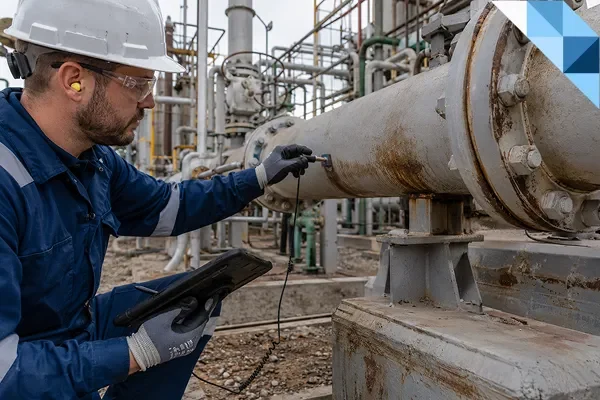
Visual inspection may find surface signs, but it may not be enough to size or confirm the concern. Depending on the material, geometry and suspected defect type, non-destructive testing methods may be needed to verify the condition.
For example, surface methods may support detection of open-to-surface indications. Volumetric methods may be used where internal weld condition is a concern. Ultrasonic thickness checks may support corrosion or erosion assessment. The method should match the suspected damage mechanism, not simply be selected because it is available.
This is an important distinction. In-service piping inspection is not about applying every inspection method. It is about selecting the method that gives the evidence needed for a defensible decision.
A crack-like indication, weld deterioration or local damage finding should normally be documented with enough detail to support follow-up:
- Exact location.
- Line number or equipment reference.
- Photos or marked-up drawings.
- Inspection method used.
- Indication size, orientation and extent, where applicable.
- Nearby supports, vibration sources or previous repairs.
- Recommended next action.
Without this context, a finding may be technically recorded but still weak for decision-making.
Leaks, Staining and Repeated Maintenance Problems
A leak is often treated as a maintenance issue: tighten the joint, replace the gasket, repair the weld or schedule a shutdown activity. Sometimes that is enough. But repeated leakage or staining in the same area should raise a broader question.
Why is the problem returning?
Flange leakage, for example, may be caused by gasket condition or bolting practice. But it may also be influenced by vibration, thermal movement, misalignment, poor support arrangement, pipe strain or excessive load near connected equipment.
If leakage appears after a modification or restart, the issue may need to be reviewed alongside brownfield piping stress re-analysis. If leakage or vibration appears close to equipment nozzles, the team may also need to consider whether equipment nozzle loads are contributing to the problem.
This is where in-service inspection becomes more than a visual record. It helps connect field symptoms with possible root causes.
Repeated maintenance findings should be documented carefully:
- How often the issue has occurred.
- Whether it appears during start-up, steady operation or shutdown.
- Whether the line is hot, vibrating or cyclically loaded.
- Whether supports or restraints nearby are damaged or changed.
- Whether the problem is close to rotating equipment or pressure equipment.
- Whether previous repairs solved the issue temporarily or not at all.
This type of evidence can help prevent the same defect from being repaired repeatedly without addressing the underlying cause.
Inspection Evidence: What Should Be Documented?
The quality of in-service inspection depends heavily on documentation. A short note saying “corrosion observed” or “leak found” is rarely enough for maintenance or integrity decisions.
Useful inspection evidence should answer three questions:
What was found?
Where was it found?
What does it mean for the piping system?
A good inspection record may include:
- Inspection date and scope.
- Line number, circuit, system or equipment reference.
- Exact location of the finding.
- Photos with clear orientation and scale.
- Marked-up isometrics, drawings or inspection sketches.
- Thickness measurement locations and readings.
- NDT method and results, where applicable.
- Defect dimensions or affected area.
- Leak location and observed condition.
- Support and restraint conditions.
- Operating condition during inspection, if relevant.
- Previous repair or inspection history.
- Recommended action and urgency.
- Whether engineering assessment is required.
This evidence matters because decisions are often made by people who were not physically present during the inspection. Maintenance planners, integrity engineers, asset owners and project managers need a record that is clear enough to support action.
Good evidence also helps avoid unnecessary work. If a finding is well documented and understood, it may be monitored instead of repaired immediately. If it is poorly documented, the team may have to reinspect, delay decisions or assume a more conservative response.
When Inspection Findings Need Engineering Review
Not every inspection finding requires engineering assessment. Some issues can be handled through routine maintenance, monitoring or planned repair.
But some findings should be escalated.
Engineering review may be needed when inspection identifies:
- Significant wall loss or uncertain remaining thickness.
- Crack-like indications.
- Repeated leaks in the same location.
- Vibration-related damage.
- Support failure or abnormal pipe movement.
- Damage near equipment connections.
- Evidence of displacement, sagging or misalignment.
- Unclear remaining life.
- Change in operating conditions.
- Damage found after modification, start-up or restart.
The purpose of engineering review is not to make the process more complicated. It is to avoid making important decisions from incomplete evidence.
For example, a corrosion finding may require more than cleaning and coating. A crack indication may need further NDT and loading review. A leaking flange may need support or movement assessment. A damaged support may indicate that loads are not going where the design expected them to go.
This is where in-service inspection connects to asset integrity management support. Inspection identifies the condition. Engineering and integrity review help determine what the condition means for safe operation.
How In-Service Inspection Supports Maintenance and Integrity Decisions
In-service inspection supports practical decisions. It helps teams prioritise where to act, where to monitor and where deeper review is needed.
For maintenance teams, it can help decide which repairs should be planned for the next shutdown and which items need earlier attention. For reliability teams, it can show recurring patterns such as repeated leakage, vibration-related wear or corrosion in specific circuits. For integrity teams, it provides evidence that may feed RBI, FFS, remaining life assessment or future inspection planning.
The best inspection outcomes are not only defect lists. They are decisions such as:
- Continue operation with monitoring.
- Repair during the next planned shutdown.
- Perform additional NDT.
- Replace a section of piping.
- Review supports or movement.
- Escalate to engineering assessment.
- Update the inspection plan.
- Investigate a recurring damage mechanism.
This is why the quality of inspection evidence matters. Better evidence leads to better decisions, less guesswork and clearer accountability.
Where NWE Supports In-Service Piping Inspection
Operating piping systems need inspection that is practical, evidence-based and connected to real maintenance and integrity decisions. Finding corrosion, cracking or leakage is only the first step. The more important question is what the finding means for continued operation, repair planning or engineering review.
NWE supports industrial clients with in-service inspection support, NDT coordination, inspection evidence review and engineering input for operating piping systems and related assets. This includes support for identifying service-related damage, documenting findings, reviewing follow-up actions and connecting inspection results to wider integrity decisions.
For plants dealing with corrosion, leakage, repeated maintenance issues, support damage, vibration or uncertainty after modification, a structured in-service inspection approach can help turn field observations into decisions that are easier to defend.
Frequently Asked Questions
What is in-service piping inspection?
In-service piping inspection is the inspection of piping systems during their operating lifecycle. It focuses on service-related damage such as corrosion, cracking, leakage, wall thinning, support issues and other findings that may affect maintenance or integrity decisions.
What are common findings in in-service piping inspection?
Common findings include external corrosion, wall thinning, coating damage, leaks, crack-like indications, weld issues, damaged supports, vibration marks, flange leakage and previous repair concerns.
Is NDT always required for in-service piping inspection?
No. Visual inspection can identify many early signs such as corrosion, coating damage, leakage marks or support problems. However, NDT is often needed when wall thickness, internal corrosion, cracking or weld condition must be verified.
When should inspection findings be escalated to engineering assessment?
Findings should be escalated when they affect pressure containment, remaining thickness, crack-like defects, repeated leakage, vibration, equipment connections, support failures or safe continued operation.