Pipeline Integrity Assessment Services
dot

Pipeline Integrity Assessment Services

Verify pipeline fitness, prevent failures, and meet regulatory expectations

Pipelines operate under pressure, geohazards and changing operating conditions. When corrosion, dents, cracks or other anomalies are detected, you need more than raw inspection data — you need an independent pipeline integrity assessment that shows whether the line can keep running safely, and under which limits.

NWE provides Pipeline Integrity Assessment Services that combine inspection data, defect assessment methods and relevant codes to support defensible run / repair / re-rate / replace decisions for onshore and offshore pipelines.

Our work helps operators:

  • Reduce the likelihood of leaks and failures
  • Optimise repair scope and maintenance budgets
  • Demonstrate compliance to regulators, partners and insurers

Need to verify damage or corrosion?

A pipeline integrity assessment is typically required whenever the condition, loading or use of a pipeline changes in a way that could affect safety or compliance.

Typical triggers include:

  • Inspection or monitoring data showing anomalies

    • In-line inspection (ILI) reports with metal loss, dents, cracks or deformation
    • Direct assessment (ECDA/ICDA/SCCDA) indicating external or internal corrosion

  • Ageing and life extension

    • Pipelines operating beyond their original design life
    • Systems with incomplete historical data or uncertain construction quality

  • Operational or design changes

    • Higher or lower operating pressures or temperatures
    • Product change (e.g. conversion between liquids and gas, or to new fluids)
    • Route changes, tie-ins, debottlenecking or flow regime changes

  • Incidents, near-misses or geohazards

    • Ground movement, flooding, subsidence or third-party damage events
    • Post-shutdown or post-repair validation before returning to service

In all of these situations, a structured integrity assessment provides quantitative evidence of risk and fitness-for-service, rather than relying on conservative assumptions or visual impressions alone.

NWE’s pipeline integrity work is focused on decisions and documentation, not just software outputs.

A typical Pipeline Integrity Assessment from NWE delivers:

  • Structured evaluation of anomalies
    We classify and evaluate defects such as corrosion metal loss, dents, gouges, crack-like flaws and weld imperfections, drawing on recognised methods (e.g. ASME B31G/B31.8S, API 579 / ASME FFS-1, BS 7910, DNV practices).

  • Remaining strength and remaining life estimates
    Where data allow, we quantify remaining wall thickness, burst capacity and corrosion growth, providing a basis for safe operating limits and reinspection intervals.

  • Run / repair / replace or re-rate recommendations
    We translate analysis into clear fitness decisions and, where needed, outline repair options and priorities that are proportionate to risk.

  • Integration with Fitness-for-Service (FFS) and Engineering Critical Assessment (ECA)
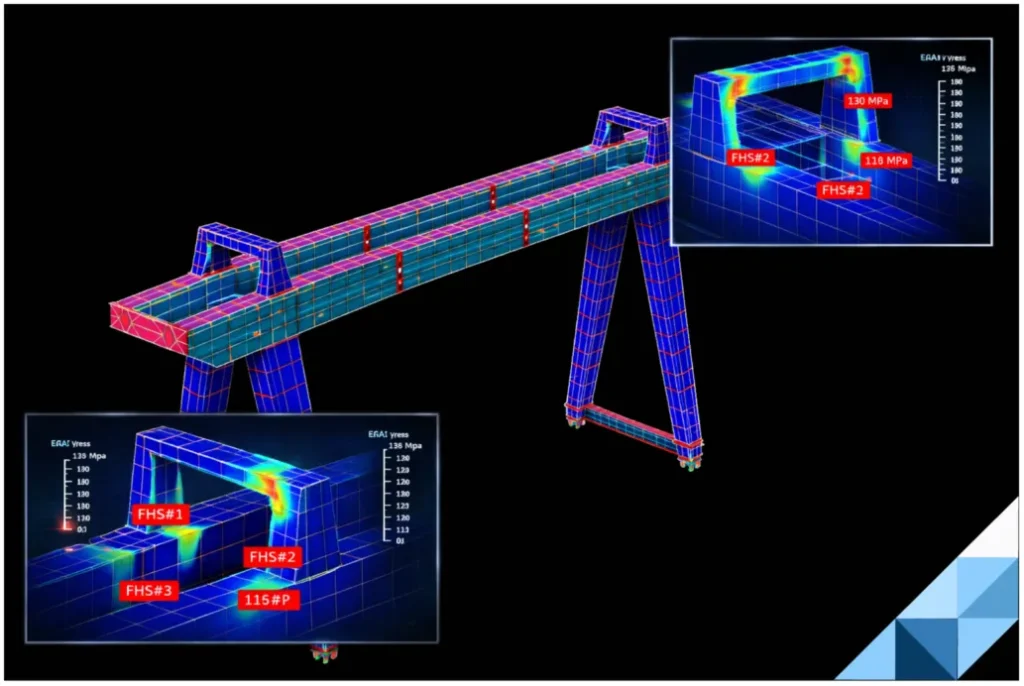
    For critical flaws or complex loading, we can draw on FFS/ECA methodologies already used within NWE’s engineering services to define flaw tolerance, fatigue resistance and defect interaction.

  • Audit-ready documentation
    Reports clearly present inputs, assumptions, methods, results and recommendations so that internal stakeholders, regulators and third parties can follow the reasoning.

The outcome is a defensible integrity position on each assessed segment or anomaly, linked to practical actions and timeframes.

NWE performs pipeline integrity assessments across a range of onshore and offshore systems, supported by its accredited inspection background and global project experience.

Typical pipeline systems:

  • Transmission and distribution pipelines

  • Gathering lines and flowlines

  • Facility and terminal pipelines

  • River crossings, road crossings and other high-consequence segments

  • Selected subsea and nearshore pipelines, in coordination with NWE’s underwater inspection capability

Typical integrity threats addressed:

  • External and internal corrosion, including local metal loss and general wall thinning

  • Dents, gouges, wrinkles and other mechanical damage, including dent–defect interaction

  • Long-seam weld issues and vintage ERW or flash-welded line pipe

  • Crack-like flaws and crack growth where suitable data and methods are available

  • Corrosion growth and combined threats in geohazard-prone or high-stress regions

If your pipeline or threat scenario is not listed here, NWE’s engineers can review the available information and confirm whether a formal integrity assessment is appropriate.

NWE combines independent inspection heritage with dedicated asset-integrity engineering support for pipelines.

Key reasons clients choose NWE:

  • Independent, accredited third party
    NWE is accredited to ISO/IEC 17020 as an inspection body and operates certified ISO 9001, ISO 14001 and ISO 45001 management systems. This underpins impartial, code-based integrity assessments and consistent quality.

  • Integrated inspection and engineering perspective
    Pipeline integrity assessments are delivered within a broader context of in-service inspection, Fitness-for-Service (FFS), RBI and structural/stress analysis services, helping avoid conflicting assumptions between disciplines and vendors.

  • Experience across high-risk, high-visibility assets
    NWE has worked with major operators across the global energy sector, supporting integrity decisions for pipelines where safety, environment and continuity of supply are critical.

Clear communication for technical and non-technical stakeholders
Reports and consultations are structured so that integrity engineers, operations teams and management can all understand what has been found, what it means, and what should happen next.

Pipeline integrity rarely stands alone. NWE’s assessment services are often combined with: 


  • Fitness-for-Service (FFS) Assessments – defect-specific, code-based evaluations to API 579 / ASME FFS-1
  • Pipeline Stress Analysis – verification of mechanical behaviour and loads on pipeline systems
  • Piping Stress Analysis – ASME B31.3/B31.1 stress checks for plant piping connected to pipeline systems
  • Structural & Structure Stress Analysis – for frames, supports and crossings carrying pipelines
  • Risk-Based Inspection (RBI) – risk-informed inspection planning for pipelines and static equipment
  • In-Service Inspection and Underwater Inspection (ROV) – data gathering that feeds directly into integrity assessments

These services ensure that inspection, analysis and risk decisions are aligned across your asset base.

Contact us or request a pipeline integrity assessment from NWE’s engineering team

Our Projects & Engineering Solutions

Explore real-world projects showcasing our expertise, innovation, and commitment to client success.

Pipeline Integrity Assessment– FAQ

Q1. Which standards do you consider in pipeline integrity assessments?

 Depending on the pipeline and threat, we draw on recognised standards and methods such as ASME B31.4 / B31.8, ASME B31G/B31.8S, API 579 / ASME FFS-1, BS 7910 and relevant DNV/CSA guidance, combined with client and regulatory requirements.

 We typically require ILI or other inspection data, design and routing information, operating pressure/temperature history, material specifications and any existing integrity or incident reports. For unpiggable lines, we can work with direct assessment data and other field measurements.

 An assessment is a focused engineering evaluation of the pipeline’s current condition and defects — essentially a detailed health check at a point in time. Integrity management is the ongoing programme that uses these assessments, along with inspection, maintenance and risk processes, to manage the pipeline over its full life.

 Pipeline integrity assessments frequently use FFS methodologies for individual flaws or segments and then feed results into RBI and integrity management plans. FFS provides the defect-level answer (“Is this feature tolerable and for how long?”), while the integrity assessment and RBI place that answer into a system-wide risk and planning context.

 Yes — provided the assessment is well-documented and based on recognised methods. Quantifying remaining strength, corrosion growth and consequence of failure supports risk-based justification for repair deferral or adjusted inspection intervals, in line with applicable regulations and company standards.

Pipeline Integrity Assessment Services

Please provide the following information to request our company services

 We’re excited to connect with you and share more about how we can collaborate together!